Ibuprofen in Japan: Japanese Brands and How They Differ
Ibuprofen is sold in Japan as イブプロフェン. Here's what each brand adds to it, how to read the dose, and how to buy it.
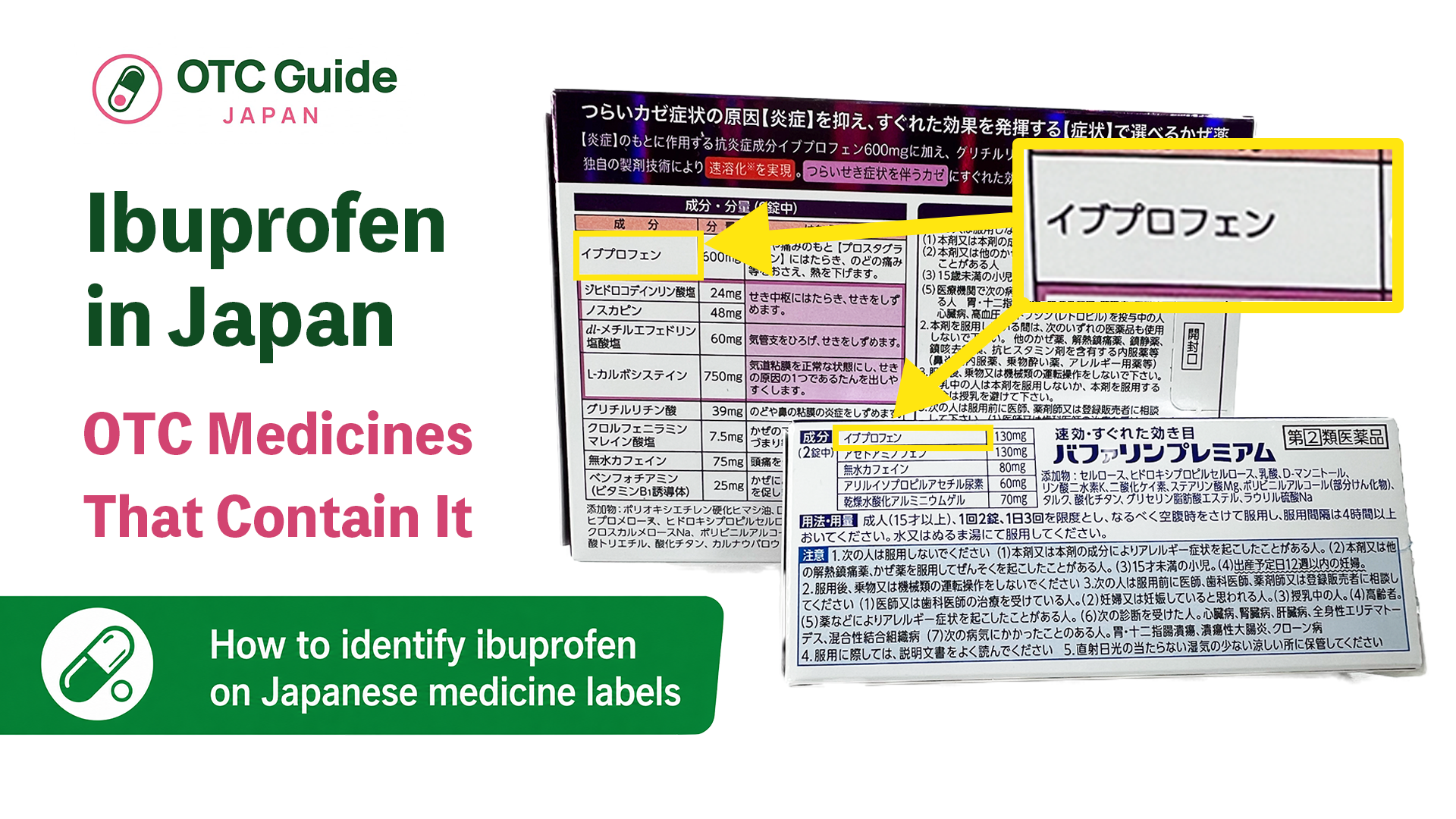
Yes, you can buy ibuprofen in Japan without a prescription. On the box it's written イブプロフェン (ibupurofen), in the ingredients section (成分・分量).
Looking for Advil or Nurofen? Search the ingredients list for イブプロフェン rather than the brand name. In Japan, ibuprofen comes under Japanese brands such as Eve, Ringl, and Bufferin, and many of them add other ingredients. The cards below show each box, so you know what to look for on the shelf.
Quick summary
- Ibuprofen only: Ringl IB and Ringl IB α200.
- Ibuprofen plus a sedative and caffeine: Eve A, Eve A EX, Eve Quick, Norshin Pure, and Bufferin Premium. Their inserts say not to drive after taking them.
- Ibuprofen plus acetaminophen: Bufferin Lunai and Bufferin Premium DX Quick+. (Bufferin Premium also has acetaminophen, plus the sedative.)
- All of them: ages 15 and up, and not with other pain relievers or cold medicines.
Ibuprofen Only
The closest thing to plain ibuprofen. These capsules have ibuprofen and nothing else active:

Ringl IBリングルアイビー
Ibuprofen 150 mg
1 capsule a dose, up to 3 times a day · Designated Class 2
No other active ingredient.

Ringl IB α200リングルアイビーα200
Ibuprofen 200 mg
1 capsule a dose, up to 2 times a day (a 3rd if symptoms come back) · Designated Class 2
No other active ingredient.
Ibuprofen Plus a Sedative and Caffeine
These add allylisopropylacetylurea, a sedative ingredient, and caffeine. Each package insert says not to operate vehicles or machinery after taking them, because drowsiness may occur. They also say not to take them with motion sickness medicines.

Eve AイブA錠
Ibuprofen 150 mg
2 tablets a dose, up to 3 times a day
Plus allylisopropylacetylurea and caffeine.

Eve A EXイブA錠EX
Ibuprofen 200 mg
2 tablets a dose, up to 2 times a day, 6 hours apart
Plus allylisopropylacetylurea and caffeine.

Norshin Pureノーシンピュア
Ibuprofen 150 mg
2 tablets a dose, up to 3 times a day
Plus allylisopropylacetylurea and caffeine.

Eve Quickイブクイック頭痛薬
Ibuprofen 150 mg
2 tablets a dose, up to 3 times a day
Plus allylisopropylacetylurea, caffeine, and magnesium oxide.

Eve Quick for Headache DXイブクイック頭痛薬DX
Ibuprofen 200 mg
2 tablets a dose, up to 2 times a day, 6 hours apart
Plus allylisopropylacetylurea, caffeine, and magnesium oxide.
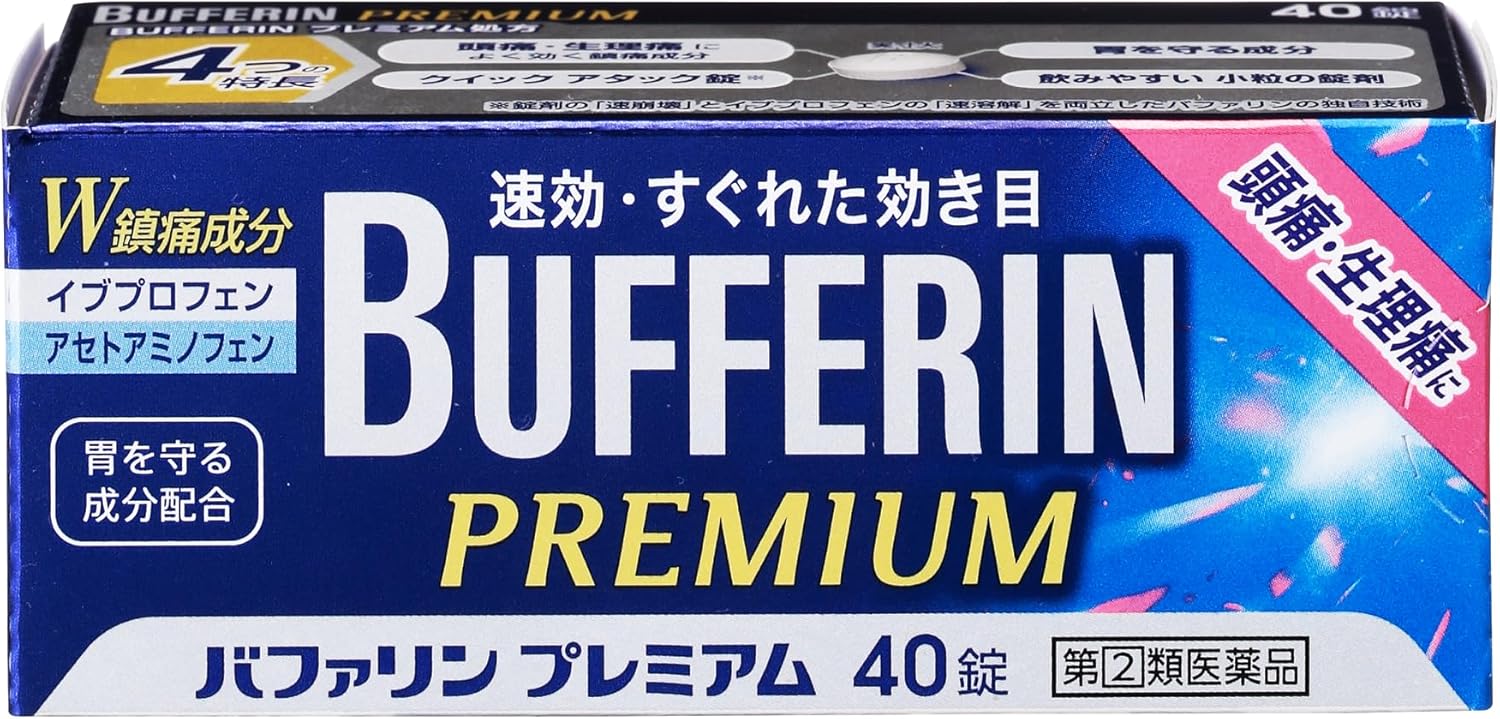
Bufferin Premiumバファリンプレミアム
Ibuprofen 130 mg + acetaminophen 130 mg
2 tablets a dose, up to 3 times a day
Plus allylisopropylacetylurea and caffeine.
Ibuprofen Plus Acetaminophen
These two combine ibuprofen with acetaminophen (also called paracetamol) and caffeine, without the sedative ingredient:

Bufferin Lunaiバファリンルナi
Ibuprofen 130 mg + acetaminophen 130 mg
2 tablets a dose, up to 3 times a day
Plus caffeine. No allylisopropylacetylurea.

Bufferin Premium DX Quick+バファリンプレミアムDXクイック+
Ibuprofen 160 mg + acetaminophen 160 mg
2 tablets a dose, up to 2 times a day (a 3rd if symptoms come back)
Plus caffeine. No allylisopropylacetylurea.
Other Ibuprofen Combinations
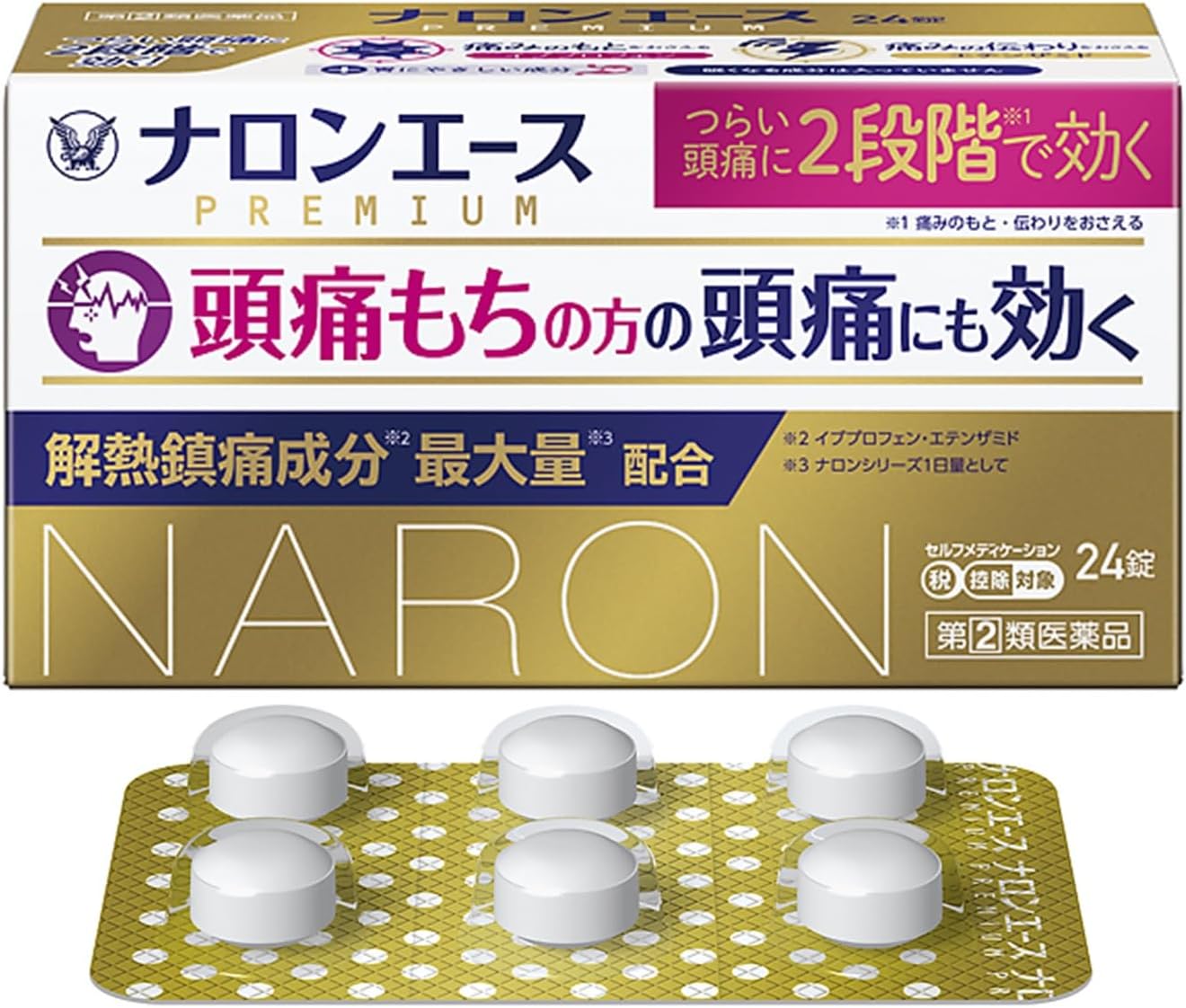
Naron Ace Premiumナロンエースプレミアム
Ibuprofen 150 mg + ethenzamide 500 mg
2 tablets a dose, up to 3 times a day
Ethenzamide is a second pain reliever.

L-Pain Kowa Alphaエルペインコーワα
Ibuprofen 200 mg, for menstrual pain only
1 tablet a dose, up to 2 times a day (a 3rd if pain comes back)
Plus butylscopolammonium bromide. The insert says not to drive after taking it (blurred vision or unusual glare may occur).
Amounts are per dose, from each package insert. Every ingredient is listed on each product page.
150 mg or 200 mg: What the Number Means
The number is the ibuprofen in one dose. The products with 200 mg a dose also allow fewer doses a day:
- 150 mg a dose (Eve A, Eve Quick, Norshin Pure, Naron Ace Premium, Ringl IB): up to 3 times a day.
- 200 mg a dose (Eve A EX, Eve Quick DX): up to 2 times a day, at least 6 hours apart. Ringl IB α200 and L-Pain Kowa Alpha: up to 2 times a day, with a 3rd dose allowed if symptoms come back.
- 160 mg a dose (Bufferin Premium DX Quick+, with acetaminophen): up to 2 times a day, with a 3rd dose allowed if symptoms come back.
Ibuprofen Is in Cold Medicine Too
Many Japanese cold medicines contain ibuprofen, including Lulu Attack, Contac, Stona, Estac, Colgen Kowa, Pabron, Benzablock, and Jikineen products. If you're taking one of them, don't take an ibuprofen pain reliever as well. The package inserts say not to combine them.
To compare the Lulu Attack cold medicines, see our Lulu Attack guide. For colds in general, see cold and flu medicine in Japan.
Rules on Every Box
The package inserts for all 12 pain relievers on this page say:
- Ages 15 and up only.
- Not with other pain relievers, cold medicines, or sedatives.
- Not if you've had asthma after taking a pain reliever or cold medicine, or you're pregnant and within 12 weeks of your due date.
- Food: try to avoid taking them on an empty stomach.
- Alcohol: don't drink before or after taking them.
- How long: don't take them for a long time.
Tap a product name above for its full warnings in English, including the rare serious side effects to watch for.
Buying Ibuprofen in Japan
All 12 are Designated Class 2 medicines (指定第2類医薬品), a group that needs a little more care. You can buy them at a drugstore when a pharmacist or registered salesperson is working. Our guide to Japan's medicine classes explains more.
Words on the box
- イブプロフェン (ibupurofen): ibuprofen
- アセトアミノフェン (asetoaminofen): acetaminophen (paracetamol)
- 成分・分量 (seibun bunryō): ingredients and amounts
- 15才以上 (jūgo-sai ijō): ages 15 and up
Asking for it
「イブプロフェンの痛み止めはありますか?」
Ibupurofen no itamidome wa arimasu ka?
"Do you have an ibuprofen painkiller?" Read it out, or show this text on your phone.
This page summarizes the Japanese package inserts for these products (updated October 2026). OTC Guide Japan translated and explained them in English, and each product page links the Japanese PDF. It is for information only and doesn't replace advice from a doctor or pharmacist. Always read the package insert that comes with the medicine.