Children's Cold Medicine in Japan: Syrups, Powders, Tablets, and Age Checks
Start with your child's age and symptoms, then compare syrups, powders, tablets, ingredients, and the Japanese label.
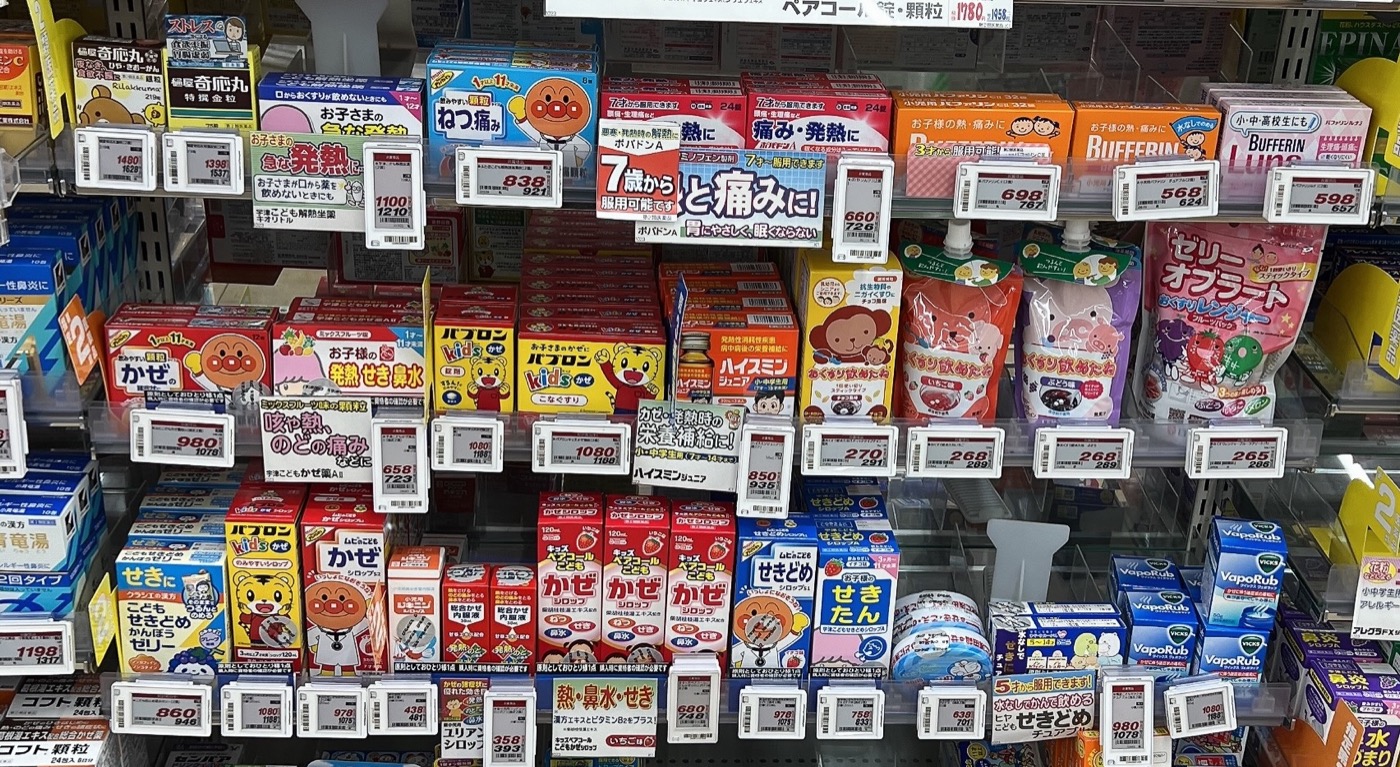


The shelf in the photo is typical of a Japanese drugstore: children's cold remedies sit beside fever medicine, cough syrup, and allergy products, often in colorful character packaging. It is easy to find the children's section. Choosing the right box takes a little more care.
Start with the age table, then match the medicine to the child's main symptoms. After that, choose a form the child can take and check the active ingredients against anything already given that day. The character on the box is never an age or safety check.
The 30-second shelf check
- Age: Find the child's age in the dosage table. If that row says 服用しないこと, do not use the medicine.
- Main symptom: Is this a mix of cold symptoms, mainly cough and phlegm, fever or pain alone, or something that looks more like an allergy?
- Form: Pick syrup, fine granules, or tablets only if the child can take that form correctly.
- Ingredients: Check everything already taken that day for acetaminophen, antihistamines, cough suppressants, and other overlapping cold-medicine ingredients.
Age comes before brand
The brand name is not enough. In the Pabron Kids cold range shown above, the syrup is labeled from 3 months, the fine granules from age 1, and the tablets from age 5. Japanese packages show age in years (才 or 歳) or months (ヵ月 or か月), so read the dosage table for the exact product in your hand.
| Japanese | Meaning |
|---|---|
| 3ヵ月以上 | 3 months and older |
| 1才以上 | 1 year and older |
| 5才以上 | 5 years and older |
| 15才未満 | Under 15 years |
| 服用しないこと | Do not take / do not use |
For children under 2: Several children's cold and cough medicine inserts in our database state that medical care should be prioritized, and the medicine should be used only when unavoidable. Read the warning for the specific product in your hand.
Syrup, powder, or tablets?
Syrup
Often available for younger children. Measure each dose with the supplied cup; the milliliter amount changes by age.
Look for: シロップ
Fine granules
Packets are easy to carry, but a younger child's dose may be only part of one packet. Follow the printed fraction exactly.
Look for: 微粒 / 顆粒
Tablets
Convenient for children who can swallow tablets safely, but the minimum age is usually higher than for syrup.
Look for: 錠
Children's cold medicines currently in our guide
The age ranges below summarize the registered product data. Open the product page for the exact age-based dose, ingredients, warnings, Japanese insert, and current Amazon link.
| Medicine | Form and label age | Purpose | |
|---|---|---|---|
|
Pabron Kids Cold Syrup | Syrup 3 months to under 7 |
General cold symptoms |
|
Pabron Kids Cold Granules | Fine granules 1 to under 11 |
General cold symptoms |
|
Pabron Kids Cold Tablets | Tablets 5 to 14 |
General cold symptoms |
 |
Utz Children's Cold Syrup A | Syrup 3 months to under 7 |
General cold symptoms |
 |
Hiya Children's Cold Syrup S | Syrup 3 months to under 7 |
General cold symptoms |
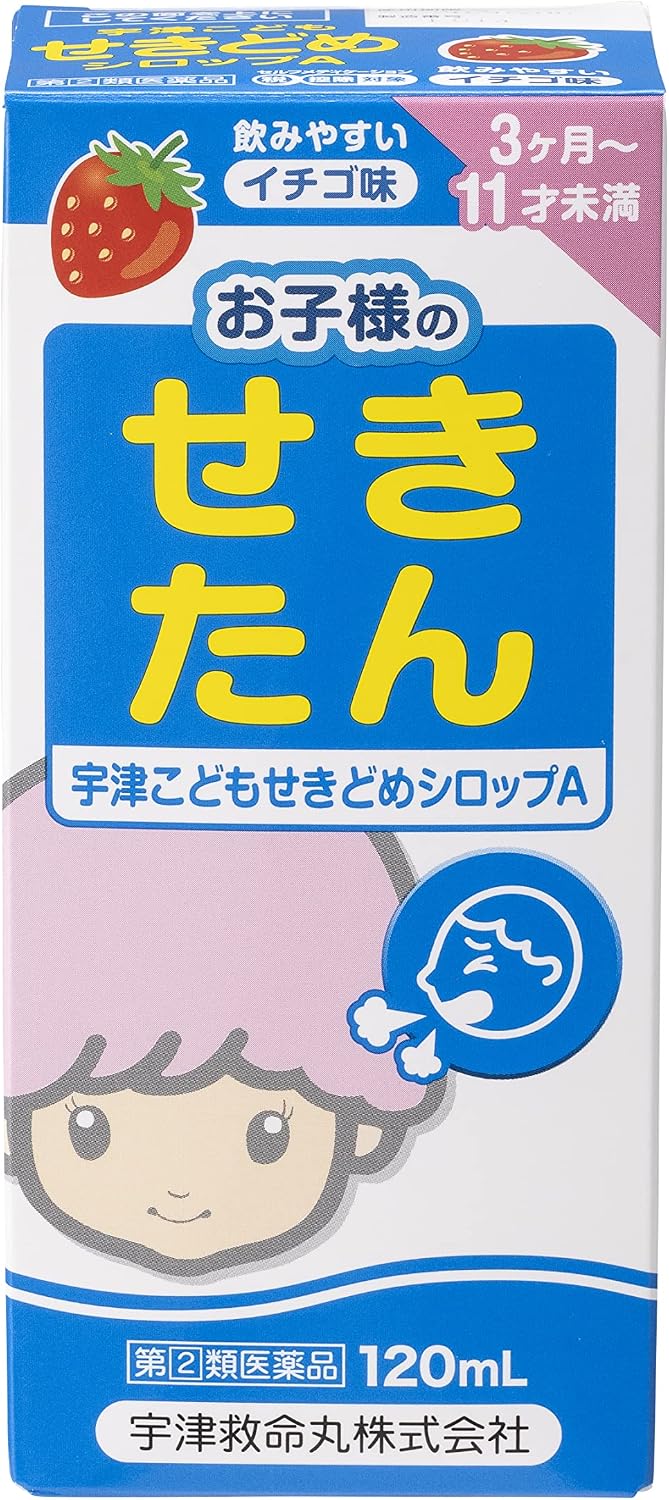 |
Utz Children's Cough Syrup A | Syrup 3 months to under 11 |
Cough and phlegm |
More options are listed in the Cold Medicine category, including Muhi children's cold and cough syrups.
Choose for the symptoms you actually see
A general cold medicine may list fever, runny nose, congestion, sneezing, sore throat, cough, phlegm, headache, and body aches. A product labeled for せき・たん is aimed specifically at cough and phlegm. It is not automatically milder or better; it covers a different set of symptoms.
The package inserts for the products listed here warn not to use them together with other cold medicines, cough or phlegm medicines, fever or pain medicines, or oral medicines containing antihistamines. Ingredients can overlap even when the front labels emphasize different symptoms. If the child has already taken another medicine, show it to a pharmacist or clinician before giving anything else.
Fever or pain only
If fever, headache, or throat pain is the main concern, check whether a children's acetaminophen product is more appropriate than a multi-symptom cold medicine. Children's Bufferin Chewable and Children's Bufferin CII are registered for ages 3–14.
Read the acetaminophen guideRunny nose may be allergy
Sneezing, clear runny nose, congestion, or itchy eyes can also occur with allergic rhinitis. Check the indication instead of choosing a cold medicine only because the box mentions runny nose.
Browse children's allergy medicinesJapanese words on children's cold medicine boxes
children / pediatric
cold
cough
phlegm
runny nose
nasal congestion
fever
sore throat
directions and dosage
Scan the box while you are in the aisle
Open the camera scanner on your phone and point it at the JAN barcode. If the product is in the OTC Guide Japan database, you can open our English product page to check the age rows, active ingredients, warnings, and Japanese package insert.
Open camera scanBuying children's cold medicine on Amazon Japan
Our product pages use tagged Amazon Japan links when an ASIN is available. Seller, shipping, price, and stock can change, so check both 出荷元 (ships from) and 販売元 (sold by) before ordering. Some products also require questions about the intended user, age, symptoms, other medicines, and quantity.
For the questionnaire and confirmation screens, see How to Order Medicine on Amazon Japan. Products marked as abuse-prevention designated may have additional purchase controls; our abuse-prevention guide explains the label.
When not to rely on an OTC product
Get medical help if the child has trouble breathing, is difficult to wake, has a seizure, shows signs of dehydration, looks seriously unwell, or is getting worse. Call 119 for an emergency.
Start with the age row, not the character on the box
Then match the symptom, form, and ingredients. Open any product for the full English dosage and warnings.
Browse Cold Medicine