Alli in Japan: Orlistat for Belly Fat, From a Pharmacist
Alli is sold in Japan only by trained pharmacists, and only to adults with a large waist who are already improving their diet and exercise. Here's what you need before you go.
Alli is sold in Japan. Alli (アライ) by Taisho Pharmaceutical contains orlistat 60 mg per capsule, and you can buy it without a prescription. But it isn't a diet pill you pick up off the shelf.
In Japan, Alli is approved to reduce visceral (belly) fat and waist size in adults with a large waist, and only for people who are already improving their diet and exercise. You buy it from a pharmacist who has had training on Alli, and you need to bring a record of your diet and exercise. This page explains the rules, from the Japanese package insert, check sheet, and information for users.
Quick summary
- For adults 18 and older with a waist of 85 cm or more (men) or 90 cm or more (women), measured at the navel.
- You must have been improving your diet and exercise for 3 months or more, and show a record of the last month.
- Sold in store by a pharmacist trained on Alli. One box per purchase, only to the person who will take it.
- It works by stopping some of the fat in your food from being absorbed, so oily stools and oil leakage can happen.
How Alli Works
Orlistat blocks lipase, the enzyme that breaks down fat in your gut. Some of the fat you eat is not absorbed and leaves your body in your stool. The maker says about 25% of the fat you eat can be expected to pass out this way, and that a reduction in waist size was seen from 4 weeks after starting.
The package insert is clear that taking Alli alone isn't enough: improving your diet and exercise at the same time is essential. The maker also says that if you stop improving your lifestyle, your waist may go back to where it was.
Who Can Take Alli: The Waist Rule
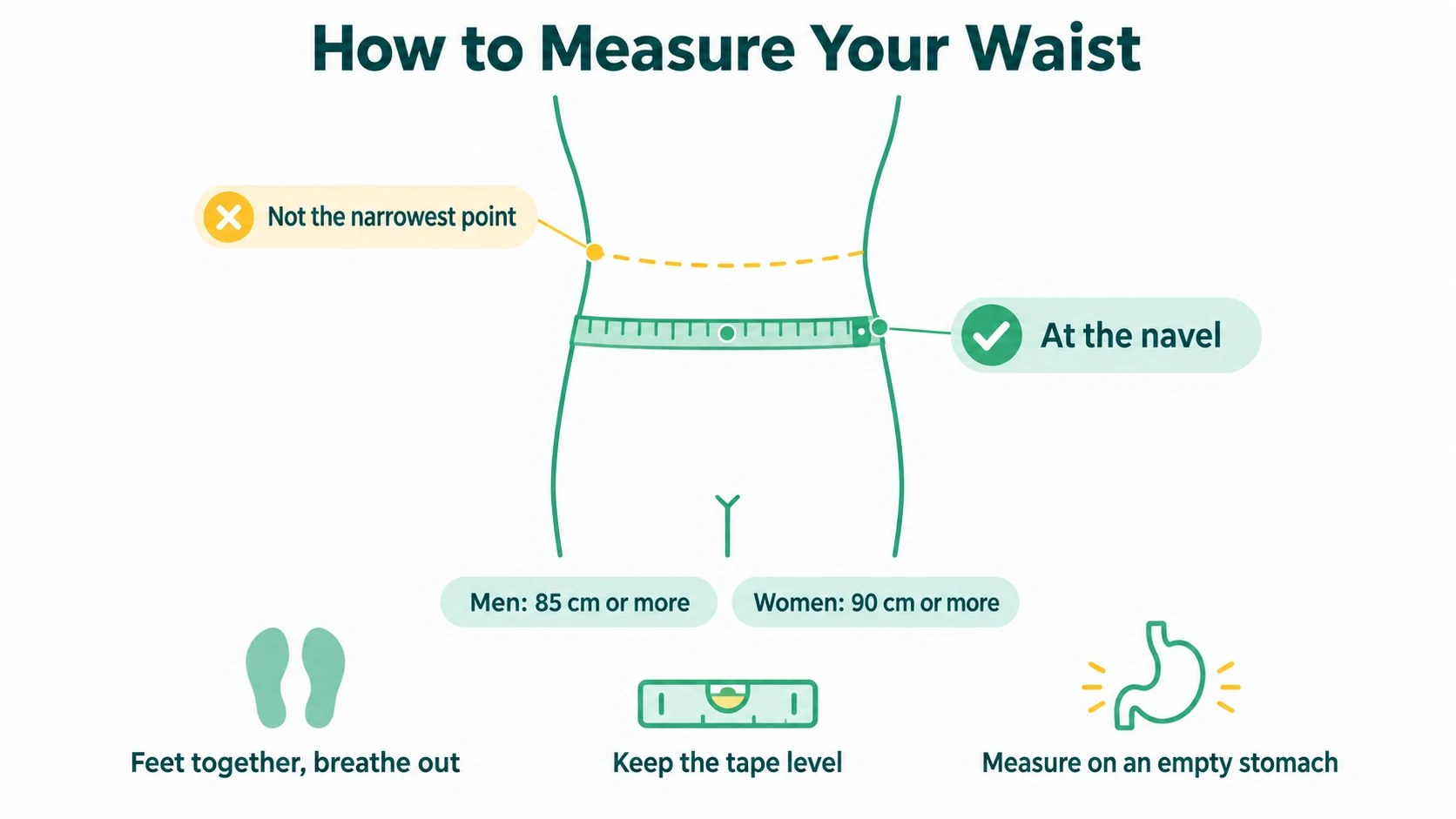
Alli is for adults aged 18 and older whose waist, measured at the height of the navel, is 85 cm or more for men or 90 cm or more for women. How to measure, according to the information for users:
- Measure at the height of your navel, not at the narrowest point.
- If your belly sticks out and your navel sits lower, measure halfway between the bottom of your ribs and the top of your hip bone.
- Stand with your feet together, breathe out lightly, and relax your stomach. Keep the tape level and don't let it dig in.
- Measure on an empty stomach.
Who Must Not Take Alli
The package insert says not to take it if you:
- Have ever had an allergic reaction to Alli or its ingredients.
- Are under 18.
- Take cyclosporine (an immunosuppressant), HIV medicine, or an anticoagulant such as warfarin.
- Have been diagnosed with malabsorption syndrome (trouble absorbing nutrients from food), cholestasis, or obesity caused by an illness or a medicine (secondary obesity).
- Are pregnant or possibly pregnant, or are breastfeeding.
- Have a BMI of 35 or more, or a BMI of 25 to under 35 together with any of these diagnoses: impaired glucose tolerance (type 2 diabetes, etc.), dyslipidemia, high blood pressure, high uric acid or gout, coronary artery disease (heart attack, angina), cerebral infarction (including TIA), non-alcoholic fatty liver disease (NAFLD), menstrual problems or infertility, obstructive sleep apnea or obesity hypoventilation syndrome, joint or spine conditions (knee or hip osteoarthritis, spondylosis, finger osteoarthritis), or obesity-related kidney disease.
Talk to a doctor or pharmacist first if you:
- Are being treated by a doctor, or have ever had an allergic reaction to a medicine.
- Have been diagnosed with pancreatitis, a gallbladder problem (such as gallstones), or kidney disease.
- Take amiodarone (a heart medicine), levothyroxine (a thyroid medicine), epilepsy medicine, antidepressants, antipsychotics (including lithium), benzodiazepines (for anxiety or sleep), or birth control pills. Alli can affect how these work.
- Have been told at a health checkup that you need a follow-up or detailed test. The check sheet also asks whether you have regular health checkups.
Before You Go: 3 Months of Diet and Exercise, and a Record
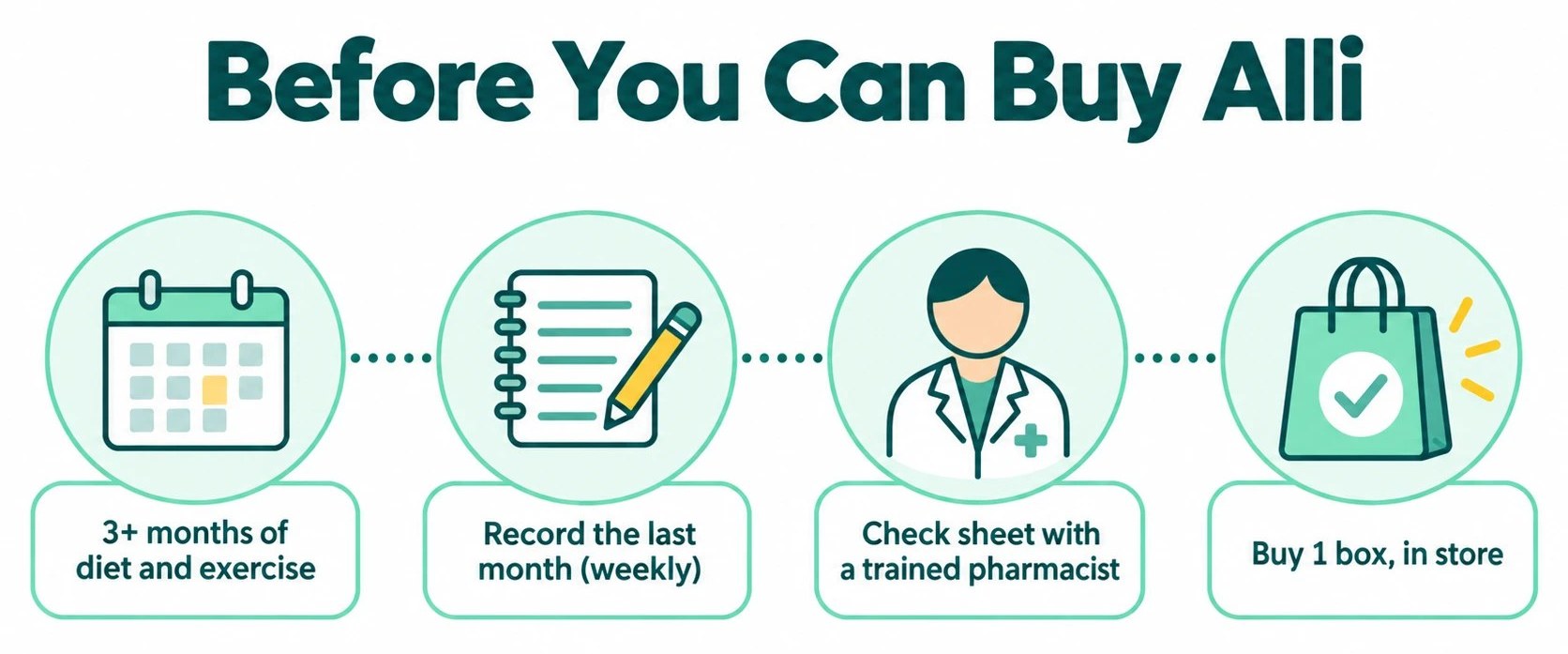
On the check sheet, the pharmacist confirms that you:
- Started improving your diet and exercise 3 months or more ago.
- Have changed how you eat (eating less, fewer snacks, or less alcohol) and how you move (more exercise, more walking, or more activity in daily life).
- Have a record of the last month. The maker's FAQ says to record your waist, diet, exercise, and weight at least once a week (4 times a month). Any format is fine, and Taisho offers a web "preparation note" and a printable record sheet.
The check sheet says Alli is for people who are already working on their diet and exercise. If you are not, it is not for you yet.
How to Buy Alli in Japan
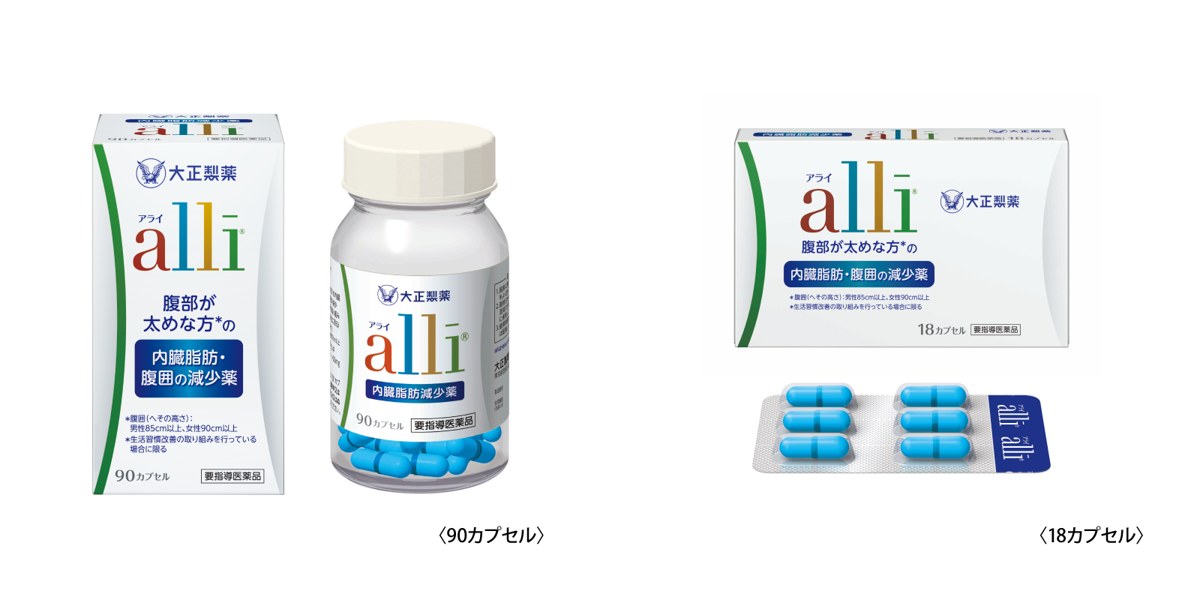
Left: the 90-capsule bottle and box. Right: the 18-capsule box.
- Where: a pharmacy where a pharmacist has completed Alli's training. The maker's FAQ says it is sold in store, not online.
- Who: only the person who will take it.
- How many: one box per purchase. It comes in 18 and 90 capsules.
- At the counter: you and the pharmacist go through the check sheet together. The pharmacist may decide not to sell it, or suggest seeing a doctor. The check sheet also asks you to read the information for users and the package insert, and to take the sticker for your お薬手帳 (medication notebook).
- Buying again: there is a separate check sheet for the second purchase onward. Measure your waist beforehand. If it is now under 85 cm (men) or 90 cm (women), the sheet says you are no longer a target for Alli. It also asks about your record since the month before your first purchase, any side effects, and whether you have taken Alli for 3 or 6 months without your waist going down.
- In English: Taisho's product catalog page has the package insert leaflet in English, Korean, and Chinese (link below).
If your Japanese is limited
「アライを買いたいです。生活習慣の記録があります。」
Arai o kaitai desu. Seikatsu shuukan no kiroku ga arimasu.
"I'd like to buy Alli. I have my lifestyle record." Read it out, or just show this Japanese text on your phone.
How to Take Alli
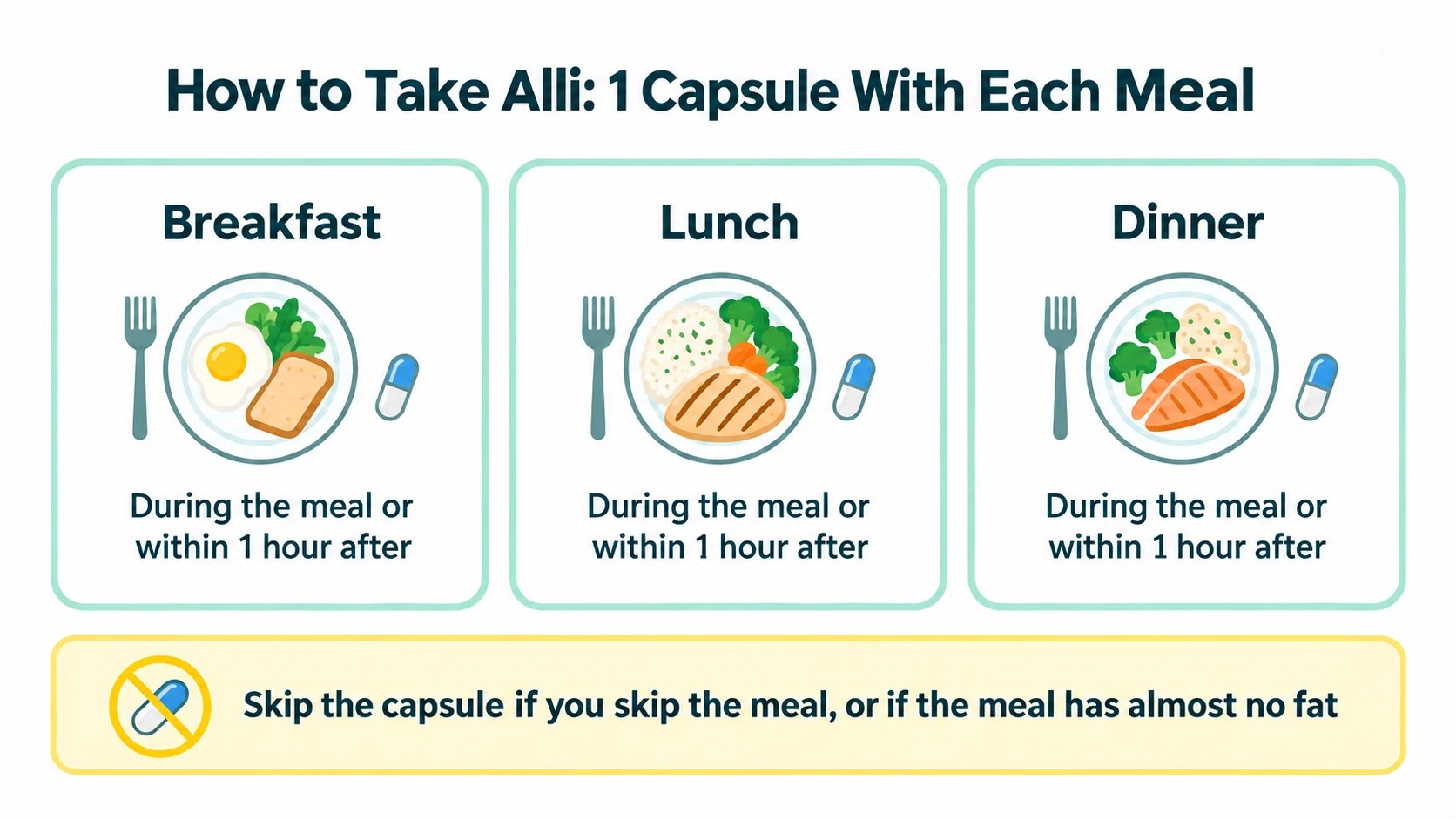
- Adults 18 and older: 1 capsule, 3 times a day, during a meal or within 1 hour after it, with water or lukewarm water.
- Don't take it if you skip a meal, or if the meal has almost no fat.
- Leave at least 4 hours between doses (maker's FAQ).
- Missed a dose? If it's within 1 hour after the meal, take it. If more than an hour has passed, skip it and take it with your next meal (maker's FAQ).
- For the bottle: before the first dose, peel off the seal and throw away the packing inside.
What to Expect: Oily Stools and Oil Leakage
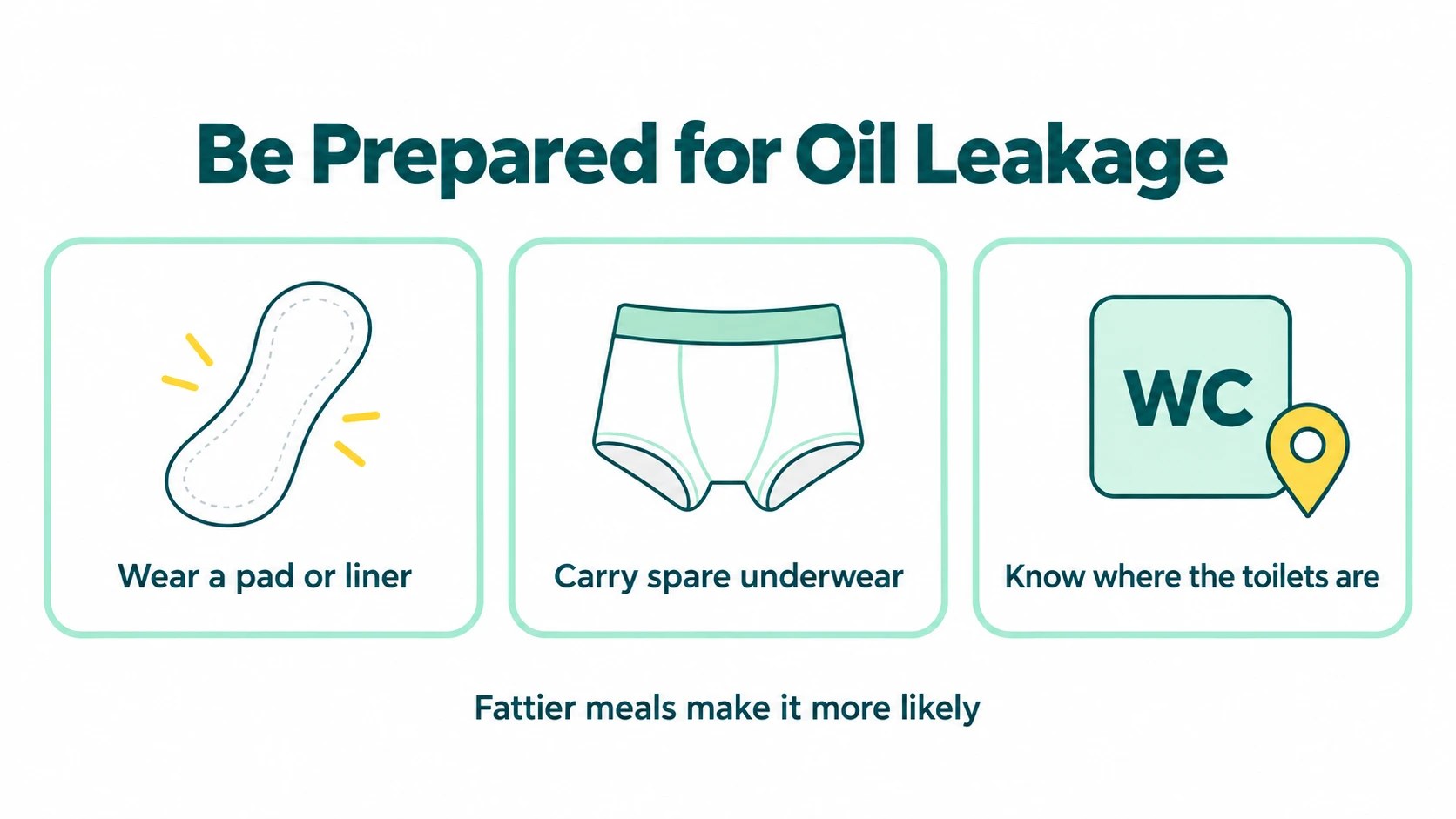
Because the fat you don't absorb has to go somewhere, the package insert says you may get oil leakage, gas with stool or oil, and fatty stools. The fattier the meal, the more likely this is. According to the information for users, most cases are mild, appear early, and tend to go away after a short time. It suggests:
- Avoiding fatty meals as much as you can.
- Wearing a pad or liner in your underwear, ideally with close-fitting underwear such as boxer briefs, and carrying spare underwear.
- Going to the toilet right away when you feel gas or the urge, and knowing where toilets are when you go out.
If these symptoms continue or get worse, stop taking it and talk to a doctor or pharmacist, bringing the package insert.
Vitamins, Checkups, and When to Stop
- Fat-soluble vitamins (A, D, E, K): Alli can lower how much of these you absorb. The information for users says you can take them as a supplement apart from meals, such as at bedtime. Signs of low levels include poor night vision or dry eyes (A), bone or muscle pain (D), anemia or numbness (E), and easy bruising, nosebleeds, or black stools (K).
- No result after 3 months? Talk to a pharmacist about whether to continue. After 6 months with no result, stop and talk to a doctor or pharmacist.
- Have a health checkup at least once a year, and tell any doctor or pharmacist you see that you are taking Alli.
- If you lose weight too fast, stop taking it and talk to a doctor or pharmacist, because an illness may be the cause.
When to Get Medical Help Right Away
- Shock (anaphylaxis): itchy skin, hives, hoarseness, sneezing, itchy throat, difficulty breathing, palpitations, or clouded consciousness right after taking it.
- Liver problems: fever, itching, rash, jaundice (yellow skin or eyes), dark urine, tiredness, or loss of appetite.
- Kidney stones: severe abdominal pain, sometimes with nausea, vomiting, or blood in the urine.
Also stop taking it right away and talk to a doctor or pharmacist, bringing the package insert, if you get a rash, itching, blisters, nausea, heartburn, stomach pain, severe abdominal pain, bloody stools, anxiety, difficulty urinating, or tiredness.
Sources & Documents
- Package insert (Japanese PDF): 18 capsules, 90 capsules
- Check sheet (Japanese PDF)
- Information for users (Japanese PDF)
- Taisho product catalog: the leaflet in English, Korean, and Chinese, and the lifestyle record sheet
- Alli brand site (Japanese): FAQ, the web preparation note, and the store finder
This page summarizes the Japanese package insert, check sheet, and information for users for Alli, and the maker's website and FAQ (October 2026). It is for information only and doesn't replace advice from a doctor or pharmacist. Always read the package insert that comes with the medicine.